Moving to Dhaka from Rajshahi: What the Capital Does to You in the First Six Months
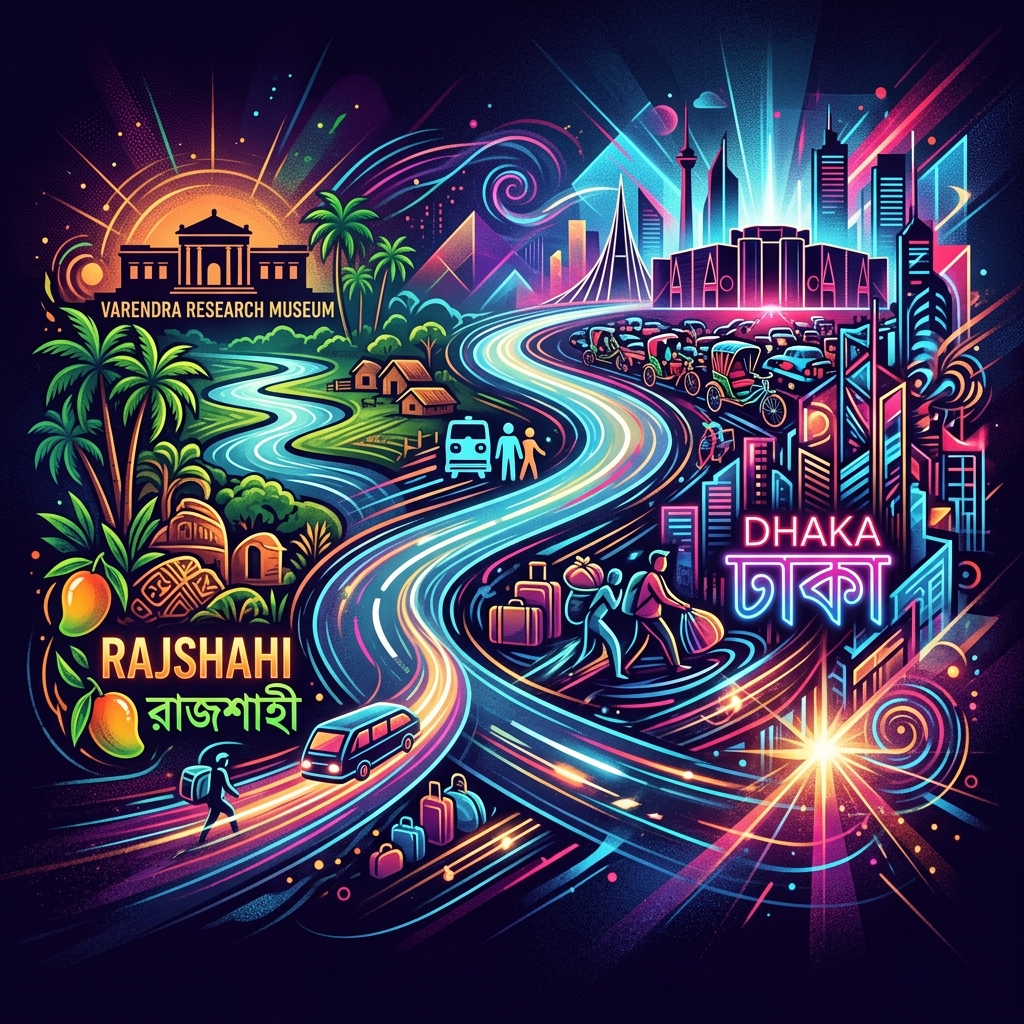
I grew up in a city where you could breathe. Dhaka took some adjusting to. Here's what nobody tells you about the move.
The first thing Dhaka does to you is the traffic.
I had been to Dhaka before, obviously — everyone in Bangladesh has been to Dhaka. But visiting a place and living in it are completely different propositions. When you visit, the traffic is an inconvenience. When you live there, the traffic is a daily decision you have to make: how early do I leave so that I arrive on time? Is this trip actually necessary? Is there any combination of route and timing that will make this bearable?
After three years of relatively wide, tree-lined roads in Rajshahi, the adjustment to Dhaka took most of my first semester.
The Scale of the City
Dhaka is difficult to convey to someone who hasn't experienced it. Official population estimates range from around 10 million to over 20 million depending on how you define the metropolitan area — either way, it is consistently ranked among the most densely populated cities on earth. The physical space the city occupies is much smaller than its population would suggest in a Western context, because the vertical development that would normally accompany this density hasn't fully happened. Dhaka is mostly low-rise — a vast sprawl of 3–6 story buildings interrupted by scattered high-rises.
The result is a city that feels boundless horizontally but compresses everything into it. There is not enough road, not enough footpath, not enough drainage, not enough park space for the number of people it's trying to hold. It has been trying to hold this many people for several decades and building infrastructure in a constant race to catch up.
Traffic as Lifestyle
I need to give this its own section because traffic in Dhaka is not just a logistical problem — it shapes how you live.
In Rajshahi, I could cycle to places. In Dhaka, cycling is genuinely dangerous on most roads. In Rajshahi, walking was often the best option for nearby destinations. In Dhaka, walking is often impossible — pavements are occupied by vendors, parked motorcycles, construction materials, or simply don't exist. The city forces you into vehicles for distances you would walk elsewhere.
A journey that would take 15 minutes in a city with functional traffic can take an hour in Dhaka during peak hours, and 90 minutes or more during bad days. "CNG" (CNG-powered auto-rickshaws), rickshaws, buses, and increasingly ride-sharing apps (Pathao and Shohoz launched around this period) are the modes of getting around.
The ride-sharing apps genuinely changed things in Dhaka for a period. Before them, the experience of getting a CNG from one part of the city to another involved negotiation — the CNG driver quotes a price well above the reasonable amount, you counteroffer, you settle somewhere in between. It was time-consuming and mildly adversarial every single time. Apps with fixed metering changed this, though they created their own problems (surge pricing during peak hours, app crashes, drivers who declined jobs they didn't want).
Mirpur, Uttara, Dhanmondi, Gulshan: Dhaka Is Not One Place
Living in Dhaka long enough, you realise that "Dhaka" is not a single city in any meaningful experiential sense. The areas are so distinct in character, social composition, and physical environment that moving between them can feel like changing cities.
Gulshan, Baridhara, and Banani are where the wealthy residents, foreign nationals, international NGOs, and embassies concentrate. Wide-ish roads by Dhaka standards, restaurants, cafes, high-walled compounds, and a general veneer of order that the rest of the city doesn't have. Also completely unrepresentative of the city most people live in.
Dhanmondi is an older residential area that has been gradually commercialised — the roads that were residential 30 years ago now have restaurants, coaching centres, and shops at ground level with apartments above. Dhaka University, Azimpur, and the old parts of the city feel historical in a way the newer areas don't.
Old Dhaka (Puran Dhaka) is the historic core — narrow lanes, Mughal-era architecture, the busiest river port, the best biryani in the city, and a density that makes even central Dhaka feel spacious. The area around Sadarghat and Lalbagh is genuinely old and genuinely different from the rest of the city.
Mirpur, Mohammadpur, Uttara — the areas where students and working people actually live in large numbers — are functional without being glamorous. Residential high-rises, markets, coaching centres, local restaurants. The places Dhaka actually runs on.
What's Good About Dhaka
I should be honest that there is a lot that's good, otherwise the above sounds like an extended complaint.
Food: Dhaka's restaurant scene is genuinely excellent, especially if you go beyond the obvious. Street food is extraordinary — grill shops, shingara stalls, bhuna khichuri at 2am, the hilsa everywhere during the season. The variety of regional Bangladeshi food available in Dhaka is something you don't get in smaller cities — Sylheti food, Chittagong food, Old Dhaka's distinctive cuisine, all available within reasonable distance.
Everything is available: Dhaka is where everything is. Books, electronics, fabric, medicine, specialist hardware, skilled tradespeople, doctors of every specialty, every kind of service — if it exists in Bangladesh, it's in Dhaka. Coming from Rajshahi, where the options were more limited, this breadth felt genuinely exciting for the first year.
The pace, for some people: Dhaka never fully sleeps. There are things happening at all hours. The city has energy even at midnight. For people who are energised by density and stimulation, Dhaka provides it in quantities that few cities can match.
Universities and opportunities: Dhaka concentrates educational institutions, tech companies, media organisations, NGOs, government, and corporate headquarters. The career and networking opportunities available in Dhaka simply don't exist at the same level anywhere else in Bangladesh. This is why people move there despite the traffic and the cost.
The Adjustment
The genuine adjustment to Dhaka took me about six months. After that, I had found the routes, the rhythms, the neighbourhoods that worked for me, and the tricks for managing the city without it managing me.
Being close to campus during university years means the traffic is partially avoidable — the daily city-crossing commute that drains so many Dhaka residents isn't forced on you. University social life also keeps a natural radius around campus that reduces the need to traverse the city constantly.
Six months in, I understood something that many Dhaka migrants eventually understand: the city is not asking you to be comfortable in it. It's asking you to find your way within it. The people who thrive in Dhaka are not people who find it easy — it's almost never easy. They're people who have figured out, specifically and individually, how to live here.
That's a different thing from loving the city. But it's the beginning of it.