A Realistic Guide for Foreigners Visiting Bangladesh: What to Expect and What Nobody Tells You
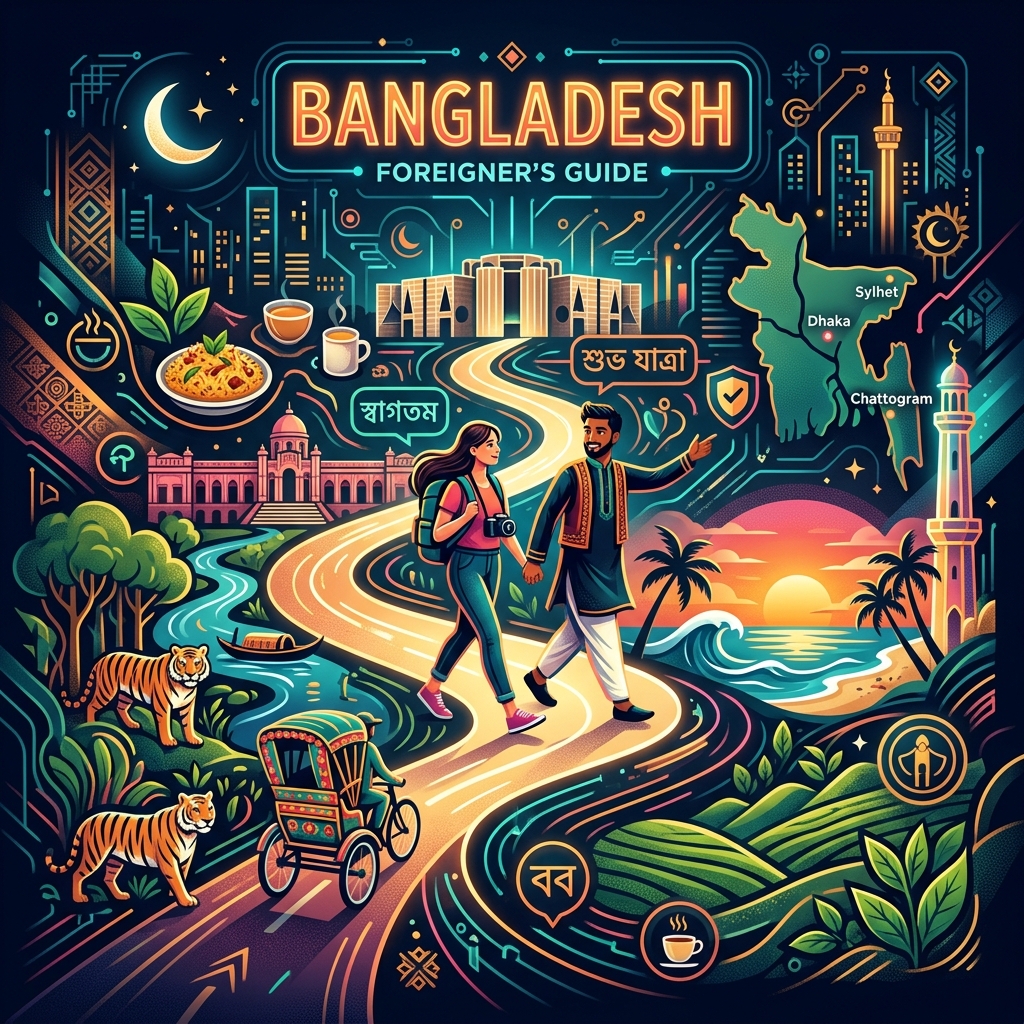
Bangladesh is not on most tourists' radar. Here's what a foreigner actually experiences when they come, from someone who was there to watch.
Bangladesh receives few foreign tourists relative to its size and the number of genuinely interesting things it has to offer. Most foreign visitors come for professional reasons — NGO work, business, development projects, diplomatic postings. The leisure tourist is comparatively rare, which means the country is largely unprepared for leisure tourism in practical terms, and also means that the foreign visitor gets an unusually genuine experience when they do come.
I observed quite a few foreign visitors during my years in Dhaka and around Bangladesh. Here's what they consistently encountered — the things that surprised them, the things nobody warned them about, and the things that made the trip worth it.
The Welcome Is Genuine
This is the first and most consistent thing: Bangladeshis are, as a general rule, genuinely interested in and welcoming toward foreign visitors. This is not the slightly forced hospitality of a well-trained tourism industry. Bangladesh doesn't have a well-trained tourism industry. The interest is real.
If you are visibly foreign in Bangladesh — particularly if you're white or East Asian — you will be noticed. People will look. Some will approach and ask where you're from. Some will want a photograph. In rural areas and smaller cities, a foreign visitor can become a minor local event. This is not threatening — it's curiosity, often with warmth behind it — but it can feel overwhelming if you're used to being anonymous in a crowd.
In Dhaka, international faces are more common and the attention is more muted. But even in Dhaka, a foreigner walking around a neighbourhood rather than being driven through it will be noticed.
The Bangladesh phrase "Aponake aamar desh-e swagotom" — welcome to my country — is said to foreign visitors with a sincerity that many countries don't quite manage.
Getting In
The visa situation for Bangladesh has improved. Bangladesh introduced an e-visa system for nationals of many countries, allowing online application before travel. Citizens of many countries also qualify for visa on arrival at Hazrat Shahjalal International Airport in Dhaka, though the lines can be slow.
The airport itself is the immediate first impression of Bangladesh. Dhaka's main international airport is functional but overcrowded and showing its age. The arrivals hall during a busy international arrival period can feel chaotic — many people, noise, no obvious queue organisation. Push through, collect your luggage, get your visa or immigration stamp, and get out. It's fine, it just requires tolerance for a less organised process than you might expect.
From the airport to the city, the options are metered taxis and ride-sharing apps. Ride-sharing (Pathao, Shohoz, or Uber where available) is far preferable to negotiating with airport taxis. The journey from the airport to central Dhaka takes anywhere from 30 minutes to 2 hours depending on traffic. Welcome to Dhaka.
What to Eat and Where
Bangladeshi food is not as internationally known as Indian or Pakistani food, which is a shame because it's excellent. The cuisine is Bengali in character — rice-based, fish-heavy (hilsa in particular is almost a national obsession), with mustard, turmeric, green chilli, and coriander as dominant flavours.
Street food: Don't be afraid of it. The paranoia about street food that some foreign visitors bring is largely misplaced — Bangladeshi street food is generally safe, particularly if the stall has volume (lots of customers means high turnover means fresh food). Shingara (lentil-filled fried pastry), jhalmuri (spiced puffed rice), biryani, and the local fast food establishments are all fine.
Old Dhaka's food: If you do one food thing in Dhaka, go to Old Dhaka. The biryani from establishments like Nanna Biriyani and Star Kabab is famous for good reason. The kacchi biryani (where the meat is cooked with the rice, not added separately) from Old Dhaka is one of the great street food experiences in South Asia.
Hilsa: If you visit during the hilsa season (monsoon, roughly June–August), eat hilsa. It's Bangladesh's national fish, and the preparations — bhapa ilish (steamed in mustard), shorshe ilish (in mustard sauce), ilish bhaja (fried) — are deeply good. Don't let anyone tell you Bangladeshi food is just a copy of Indian food — hilsa preparations are distinctively Bangladeshi in character.
Dairy and sweets: Bangladesh has excellent dairy — mishti doi (sweetened yogurt), rasgolla, chomchom, and other sweets from the mithai shops are worth seeking out. Rajshahi in particular is known for its sweets.
Getting Around
Within Dhaka, the practical options:
- Ride-sharing apps: Best option for foreigners. English-language interfaces, metered pricing, less negotiation.
- CNG auto-rickshaw: Requires negotiating a fare. The driver's opening price is always negotiable; don't pay it.
- Rickshaw: For short distances in areas where traffic allows. Peaceful, slow, quintessentially Dhaka.
- Bus: Difficult to navigate without Bangla.
Between cities:
- Train: Bangladesh's rail network connects the major cities, and the trains are generally more comfortable than the roads suggest they might be. The overnight train to Chittagong or Rajshahi from Dhaka is perfectly fine.
- Bus: Extensive network, decent air-conditioned coaches for major routes. Slower than train for long distances.
- Air: Biman Bangladesh Airlines and domestic carriers serve major cities. Tickets are relatively affordable.
Safety
Bangladesh is not a dangerous country for foreign visitors by any reasonable measure. The kinds of crime that affect tourists in some countries — scams targeting foreigners, robbery, harassment that goes beyond the inconvenient — are not common.
The genuine safety concerns in Bangladesh are:
- Traffic: Road safety is poor. Crossing roads in Dhaka requires attention and patience. Don't assume vehicles will stop.
- Cyclones and flooding: Bangladesh is vulnerable to natural disasters. During cyclone season (April–May and October–November), pay attention to weather warnings.
- Political protests and hartals: Bangladesh has periodic political shutdowns (hartals) and demonstrations that can affect movement around cities. These are usually announced in advance and are generally not targeted at foreigners, but being caught in the wrong place at the wrong time during political tension is possible.
- Water: Don't drink tap water. Bottled water is cheap and widely available.
What Foreigners Consistently Get Wrong
After watching many foreign visitors pass through Bangladesh, a few consistent misunderstandings:
Assuming it's like India: Bangladesh is neighbouring India and shares significant cultural heritage, but it's a distinct country with a distinct character. The food is different. The culture is different (majority Muslim vs majority Hindu). The language is Bangla/Bengali, which crosses the border, but the accents, vocabulary, and cultural context are distinct. Coming in with India as your reference point will mislead you more than help.
Expecting a developed tourism infrastructure: Bangladesh has tourist sites but relatively little infrastructure connecting them. Signage, transportation links to remote sites, English-language information, and the general apparatus that makes tourism easy in Thailand or Sri Lanka simply isn't there. You need more initiative and more tolerance for uncertainty when travelling independently in Bangladesh.
Underestimating how much people want to talk: The urge to engage foreign visitors in conversation is real and pervasive. If you want to be left alone, this can feel overwhelming. If you engage — even with the limited Bangla phrase of "Amar naam [your name], ami [your country] theke" (my name is X, I'm from Y) — the warmth comes back immediately.
Judging by Dhaka alone: Many foreign visitors see Dhaka, spend a few days, and form their impression of Bangladesh from that. Dhaka is chaotic, dense, and difficult. It's also not representative of the country. The south coast, the Sundarbans, the northwestern agricultural belt, the Chittagong Hill Tracts — these are all Bangladesh too, and they're very different.
What Makes It Worth It
For the right kind of traveller, Bangladesh is one of the more genuinely interesting countries to visit in South Asia precisely because so few foreigners go. You see things unmediated by the tourist industry. You have real interactions with people who are not performing hospitality for commercial reasons. You find yourself in situations that don't appear in any guidebook.
The Sundarbans is one of the great natural environments in the world and is genuinely accessible from Dhaka. Cox's Bazar's beach at low tide, with no one around, is extraordinary. The Paharpur ruins are among the most significant Buddhist heritage sites in South Asia. The river journeys between cities by ferry are experiences that no longer exist at this scale in most of Asia.
Bangladesh rewards the visitor who comes with patience, curiosity, and no fixed expectation of comfort. It does not reward the visitor who needs everything to work the way it does at home.