Sylhet and the Tea Gardens: Bangladesh's Most Underrated Region
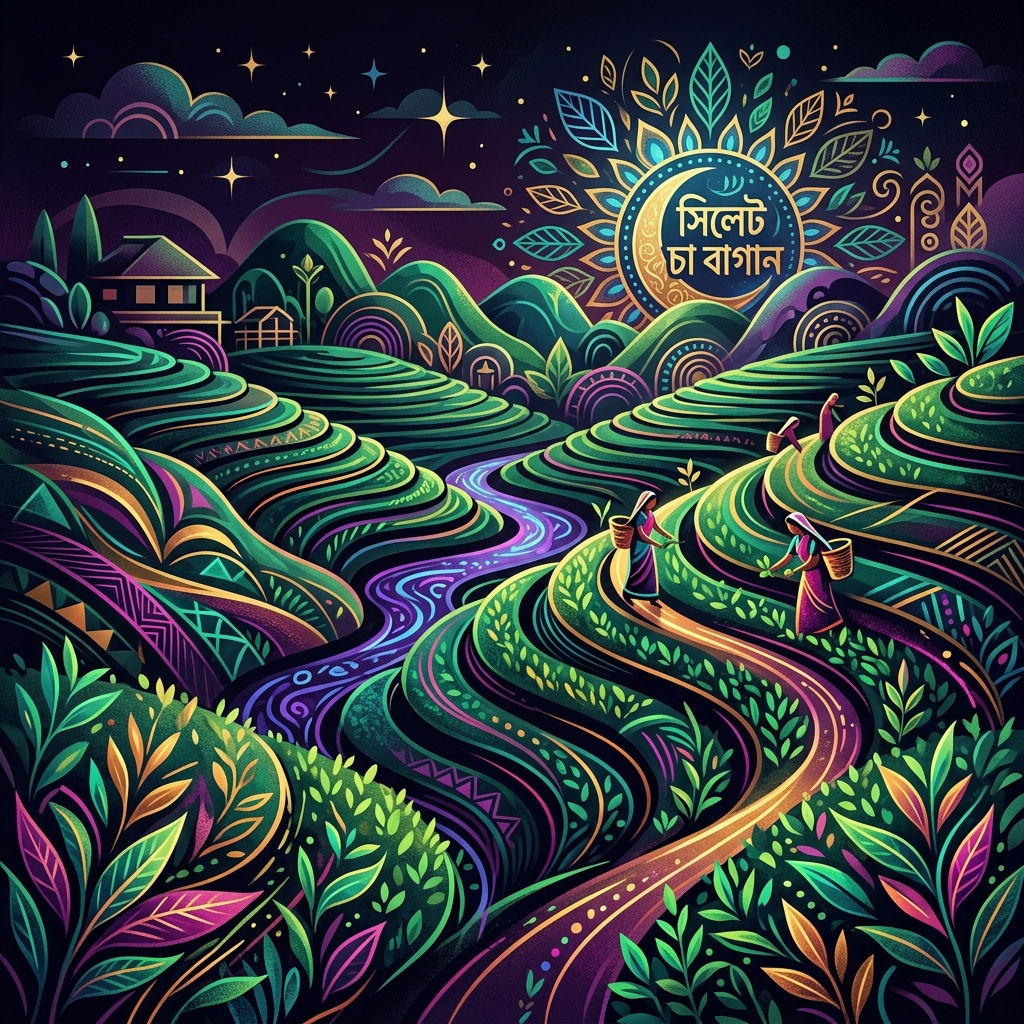
The northeast of Bangladesh looks nothing like the rest of the country. Rolling hills, tea estates, and a completely different pace.
Most of Bangladesh is flat. Remarkably, stubbornly flat — the Bengal delta is one of the flattest large-scale landforms on earth, the accumulated sediment of three major river systems deposited over millennia. You can travel for hundreds of kilometres without the horizon ever gaining any texture.
Sylhet is the exception.
The Sylhet Division in northeastern Bangladesh sits at the edge of the Indian state of Assam and the Meghalaya hills, and the landscape changes dramatically. There are hills here — low, rolling, covered in tea bushes arranged in precise rows. There are forests. There are rivers that run fast and clear rather than the silted brown of the delta rivers. There are haors — vast shallow wetlands that function as rice paddies in the dry season and become inland seas during the monsoon.
I visited in the dry season of 2019 and came back understanding why people from this region feel their home is categorically different from the Bangladesh most people picture.
The Tea Estates
Bangladesh is not internationally famous for tea, but it should be. The Sylhet region's tea estates date from the British colonial period — the first tea garden was established at Malnicherra in 1857, and is still producing tea today.
The tea estates (called bagans) cover large areas of the hills around Srimangal (also spelled Sreemangal), which calls itself the "tea capital of Bangladesh." There are around 160 tea gardens in the Sylhet region, producing black tea for both domestic consumption and export.
The visual of a mature tea estate is remarkable — a continuous low green canopy of tea bushes trimmed to waist height, covering rolling hills as far as you can see. The tea pluckers (primarily women from the tea garden communities, descendants of workers brought from central India during the colonial period) move through the rows with bags on their backs. The processing factories are at the centre of each estate, and if you visit during production season, you can smell the fermentation from a distance.
In Srimangal itself, you can visit the tea auction centre, several of the estates with prior arrangement, and the famous "seven-layer tea" — a regional specialty where teas of different densities and flavours are carefully layered in a glass. It's more performance than beverage, but it's memorable.
Ratargul Swamp Forest
About 30km from Sylhet city, Ratargul is Bangladesh's only freshwater swamp forest. It's small — a few hundred hectares — but completely distinctive. In the monsoon months (June–October), the water rises to flood the forest floor, and the trees stand in a metre or more of clear water. You travel through it by boat, under the canopy, with the submerged tree roots visible beneath you.
In the dry season, the water recedes, the forest floor reappears, and you can walk on the roots and mud between the trees. Both seasons have their character. The forest is home to a significant variety of birds and some wildlife, though the real appeal is the eerie beauty of the flooded-forest environment.
Getting to Ratargul from Sylhet city requires a CNG or local vehicle to the bank, and then a row boat into the forest. It takes most of a day and is straightforward with a local guide.
Jaflong: The Stone Country
North of Sylhet, near the Indian border at the foot of the Meghalaya hills, is Jaflong. The Piyain river comes down from the Meghalaya hills carrying clear water and an enormous volume of stones and pebbles — smooth, varied, beautiful stones in greys and whites and ochres, deposited by the current across wide shallow beaches.
Jaflong is the primary source of stone aggregate for construction in Bangladesh. You see stone-collection operations everywhere — workers gathering stones from the riverbed, loading them onto boats. The stone trade here is a significant local economy.
But the setting itself — the wide, clear river, the stone beaches, the Meghalaya hills rising dramatically just across the Indian border (you can see the hills and hear the waterfalls on the Indian side from the Bangladesh bank) — is unlike anything else in Bangladesh. On a clear day, the layered blue distances of the Meghalaya highlands give a sense of geological scale that the flat delta never achieves.
The river can be shallow enough to walk across in the dry season. People do, trading across the border in ways that are informal and continuous.
The Haor Wetlands
The haors of Sylhet and Sunamganj are among the least-visited remarkable places in Bangladesh. These are vast seasonal wetland basins — bowl-shaped depressions in the landscape — that fill with water during the monsoon to a depth of several metres, creating an inland sea, and then drain in the dry season to reveal rice paddies.
At peak flood, the haors are navigable by boat across an enormous flat water surface. The experience of travelling by country boat across a haor during monsoon — water in every direction to the horizon, the occasional floating home or boat market, communities perched on earthen mounds above the water level — is completely unlike anything else in Bangladesh or probably anywhere.
Tanguar Haor in Sunamganj is a Ramsar site (internationally recognised wetland of importance) and one of the more significant bird habitats in Bangladesh. During winter, migratory birds come in very large numbers. The local fishermen who work these waters live a life oriented entirely around the seasonal rhythm of the flood.
The Sylheti People and Diaspora
Sylhet has one of the most distinctive diaspora histories in South Asia. Sylheti people — particularly from the Sylhet region — emigrated to the United Kingdom in large numbers starting in the 1950s and 60s, primarily working in the British restaurant industry. The British Bangladeshi population is overwhelmingly of Sylheti origin, and the "Bangladeshi restaurant" in British high streets is almost exclusively Sylheti in ownership and staffing.
The result: Sylhet receives enormous remittances from the UK. This money is visible in the landscape — larger and newer houses than you'd expect given local incomes, "London money" houses that are substantially more elaborate than local building norms, a general prosperity that comes from outside. The relationship between Sylhet and Britain is one of the more distinctive diasporic ties in South Asia.
Sylheti is also distinct from standard Bangla to the degree that Sylhetis often consider it a separate language rather than a dialect — it's mutually intelligible with difficulty but has distinct phonology and vocabulary.
Getting There
From Dhaka, Sylhet is accessible by:
- Train: The Upaban Express and Parabat Express overnight trains are the most comfortable option. About 6–7 hours.
- Bus: Multiple operators, similar journey time.
- Air: US-Bangla Airlines and Novoair run domestic flights, taking about an hour.
Within the region, CNG auto-rickshaws and local transport handle the distances well. A few days is enough to see the central attractions; a week allows you to reach the haors and explore more thoroughly.
Srimangal has a small but functioning tourist accommodation scene — some guesthouses and tea estate rest houses that can be booked with advance arrangement. Sylhet city has a full range of hotels.
Coming from the flat south or the urban density of Dhaka, Sylhet feels like a different country. The hills and the tea estates and the clear rivers earn that feeling.